Katharina Hadassah Wendl
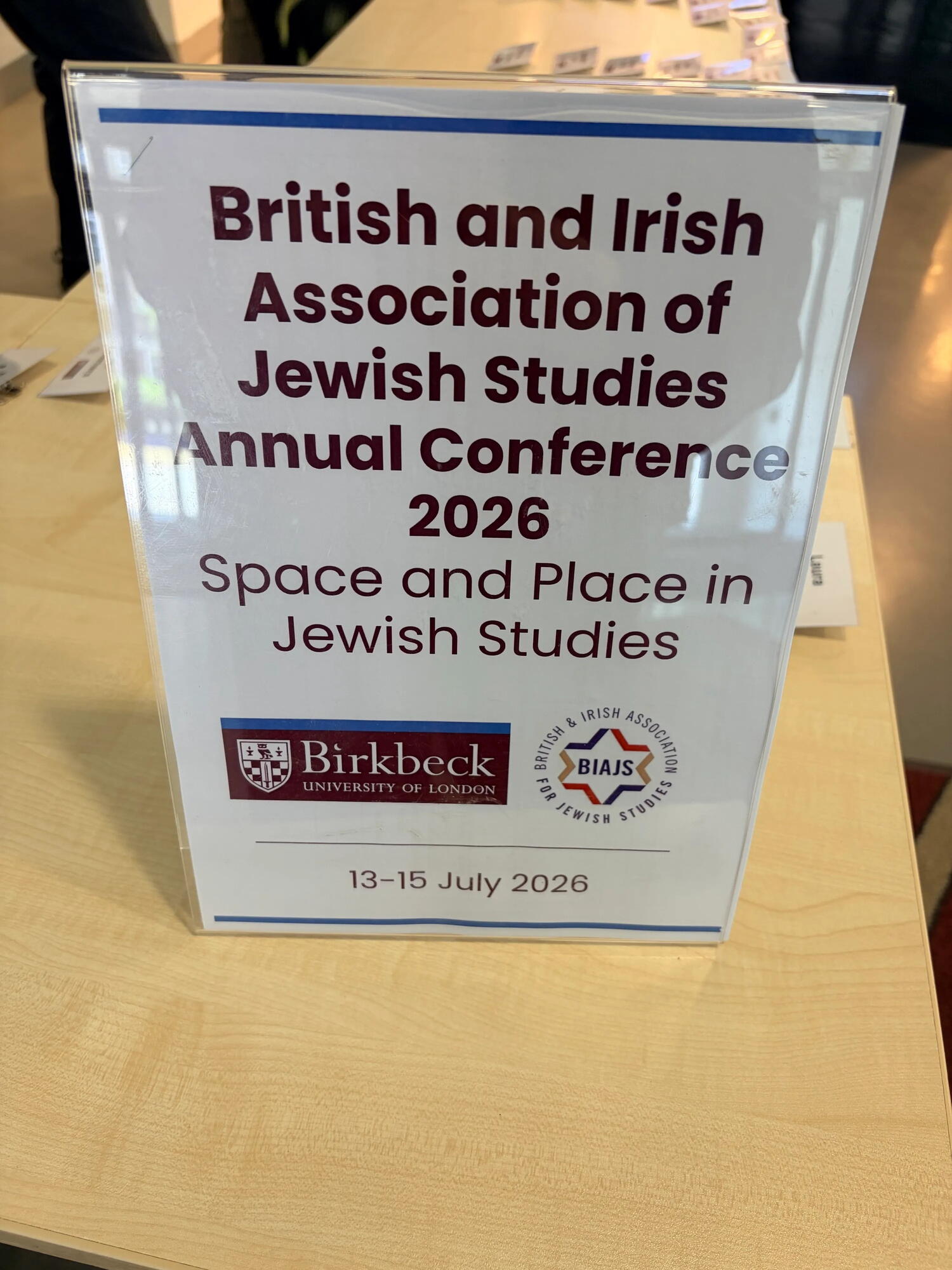
From July 13 to 15, the campus of Birkbeck, University of London, was filled with illuminating conversations, discussions and debates about Space and Place in Jewish Studies. This year’s conference of the British and Irish Association of Jewish Studies (BIAJS), was proudly supported by the Leo Baeck Institute London, which calls Birkbeck its home. The diverse programme brought together papers on Jewish space, history, memory and identity. Sessions ranged from explorations of the borders of ancient Israel and conceptions of space in medieval Jewish philosophy to German debates on Jewish emancipation.
The Leo Baeck Institute London was represented by several former and current LBI fellows, PhD students and researchers, alongside colleagues from our wider network of German-Jewish history. Nathanel Stawski, current LBI Fellow at the University of Cambridge, presented ‘From Reluctant to Radical Revolutionaries: Zionism and the Late 19th Century Crisis of Liberalism,’ arguing for a more nuanced understanding of early Zionism as embedded in conservative tendencies within Central European liberalism. Based on this reading, the early Zionism of Theodor Herzl and Max Nordau is best understood as a conservative, anti-revolutionary response to the plight of the Jews. It is thus similar to other liberal movements, particularly in Germany, that sought to preserve the hegemony of Central European bourgeois liberalism.
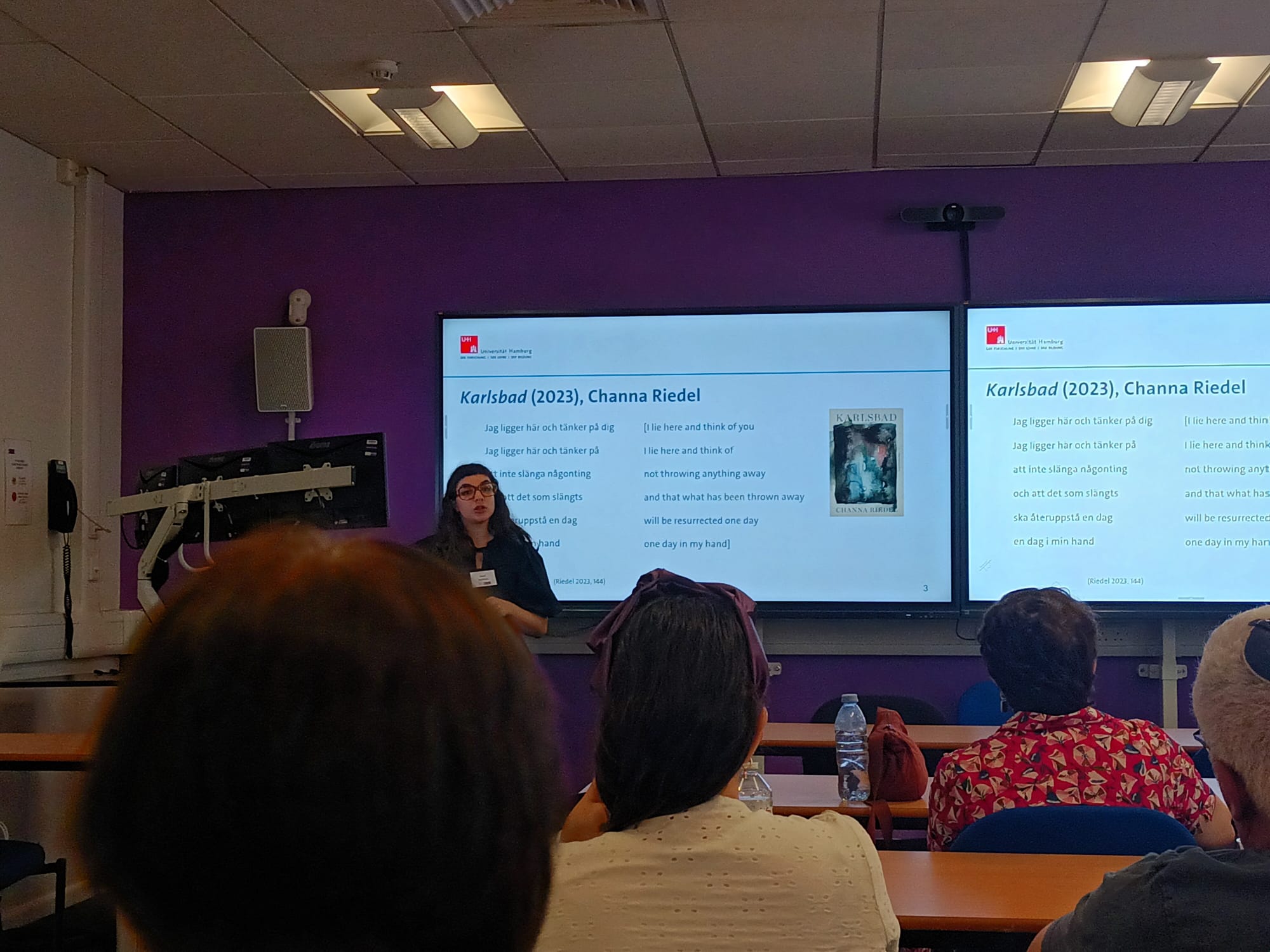
Current LBI Fellow Anna Hofman (University of Hamburg) presented her doctoral research on Jewish third-generation poets, in which she maps the ways third-generation poetry engages with sites and concepts of home, city, and nation through visual motifs. Focusing on the collection of poems Karlsbad by the Swedish-Jewish writer Channa Riedel, published in 2023, she showed how temporal traversals of past-present-future, and re-examinations of national memory discourses shape contemporary poetry on the Holocaust.
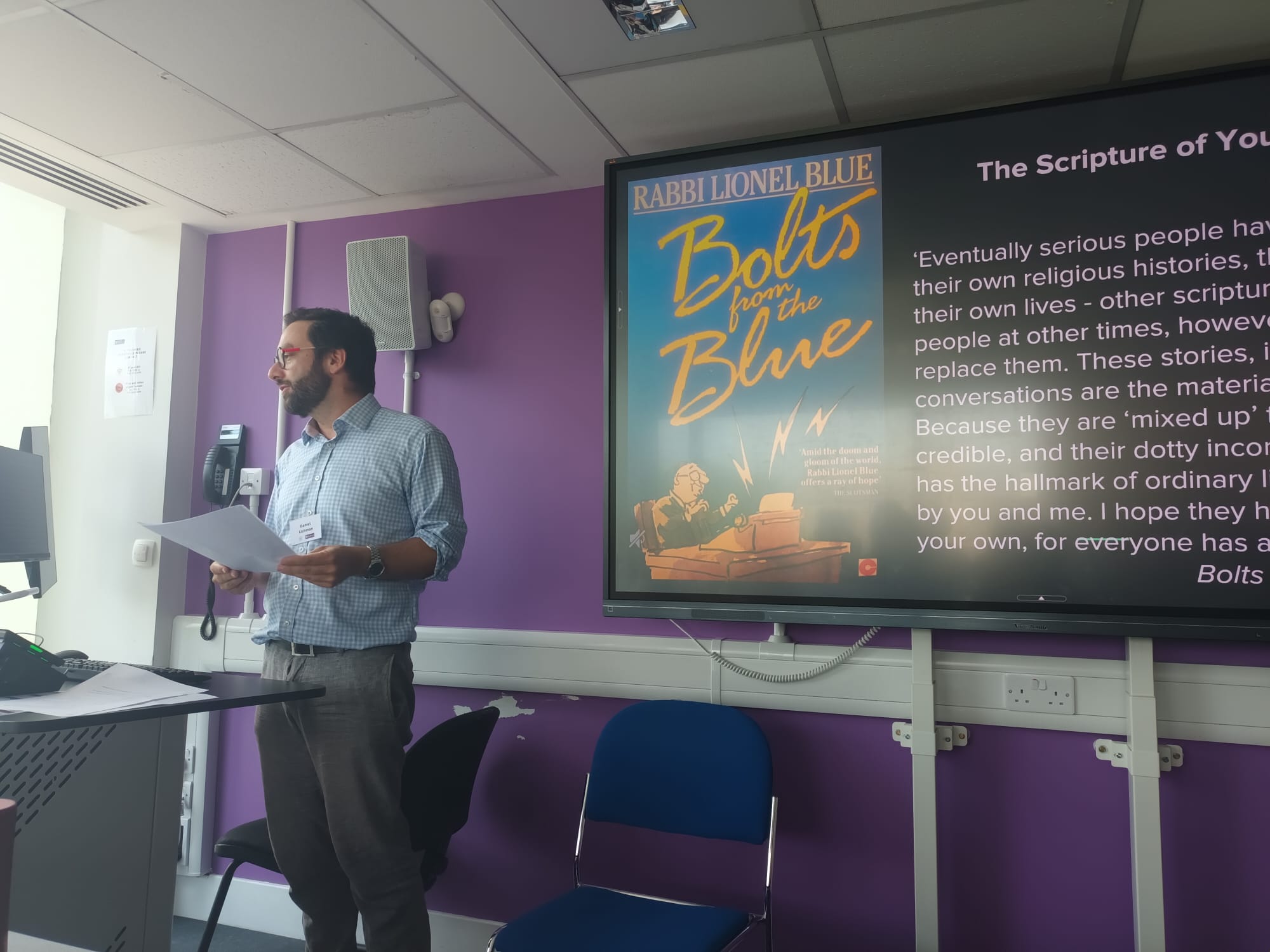
In his paper ‘Bedrooms, Bathrooms, Kitchens and Cars: Rabbi Lionel Blue’s Radio Congregation,’ our PhD student Daniel Lichman (Birkbeck, University of London) explored Rabbi Lionel Blue’s extensive written and audio output. His radio sermons on the BBC’s Thoughts for the Day reached a broad non-Jewish audience across the UK. Daniel Lichman analysed Blue’s work in the context of German Jewish theology, which he was exposed to during his rabbinical studies at the Leo Baeck College. Lichman argued that Blue’s message can be read through Rabbi Leo Baeck’s theology of the Jewish mission to the Gentiles. Like Baeck, he sought to bring fundamental human values, meditative prayer and introspection to a post-Christian British audience.
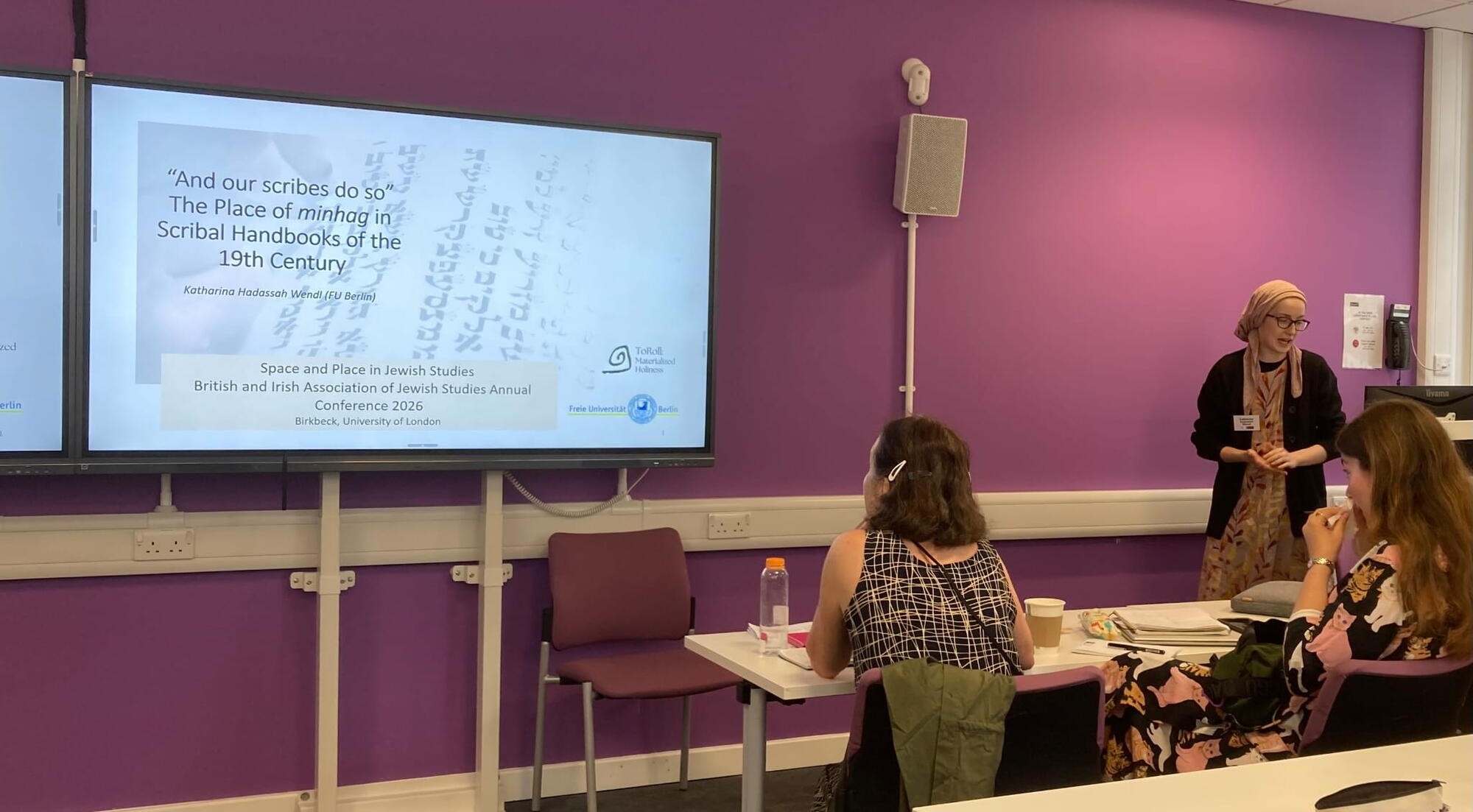
Katharina Hadassah Wendl (Freie Universität Berlin), an intern at the LBI London, discussed her research into the tensions between Jewish scribal law and practice in ‘“And Our Scribes Do So”: The Place of Minhag in Scribal Handbooks of the 19th Century’. Drawing on several handbooks on writing Torah scrolls from the 19th century, she argued that instructional literature for Jewish scribes underwent an increasing textualisation and legalisation. This placed increasing demands on scribes to abandon practices that rabbinic authorities deemed controversial, and drove a standardisation of scribal practice that continues to this day.
LBI Lecture Series speaker Prof Tony Kushner (University of Southampton) presented findings from his recently published book The Jewish Pedlar. An Untold Criminal History. In ‘Space, place and race. Edward Thomas and a Jewish murderer,’ Kushner explored the memories connected to Jacob Harris, a Jewish pedlar and smuggler who murdered three people in 18th-century Sussex. Through a reading of a poem by the British war poet Edward Thomas centred on Harris, Kushner explored how humanity is restored to this figure and how his memory is inscribed into the local landscape.
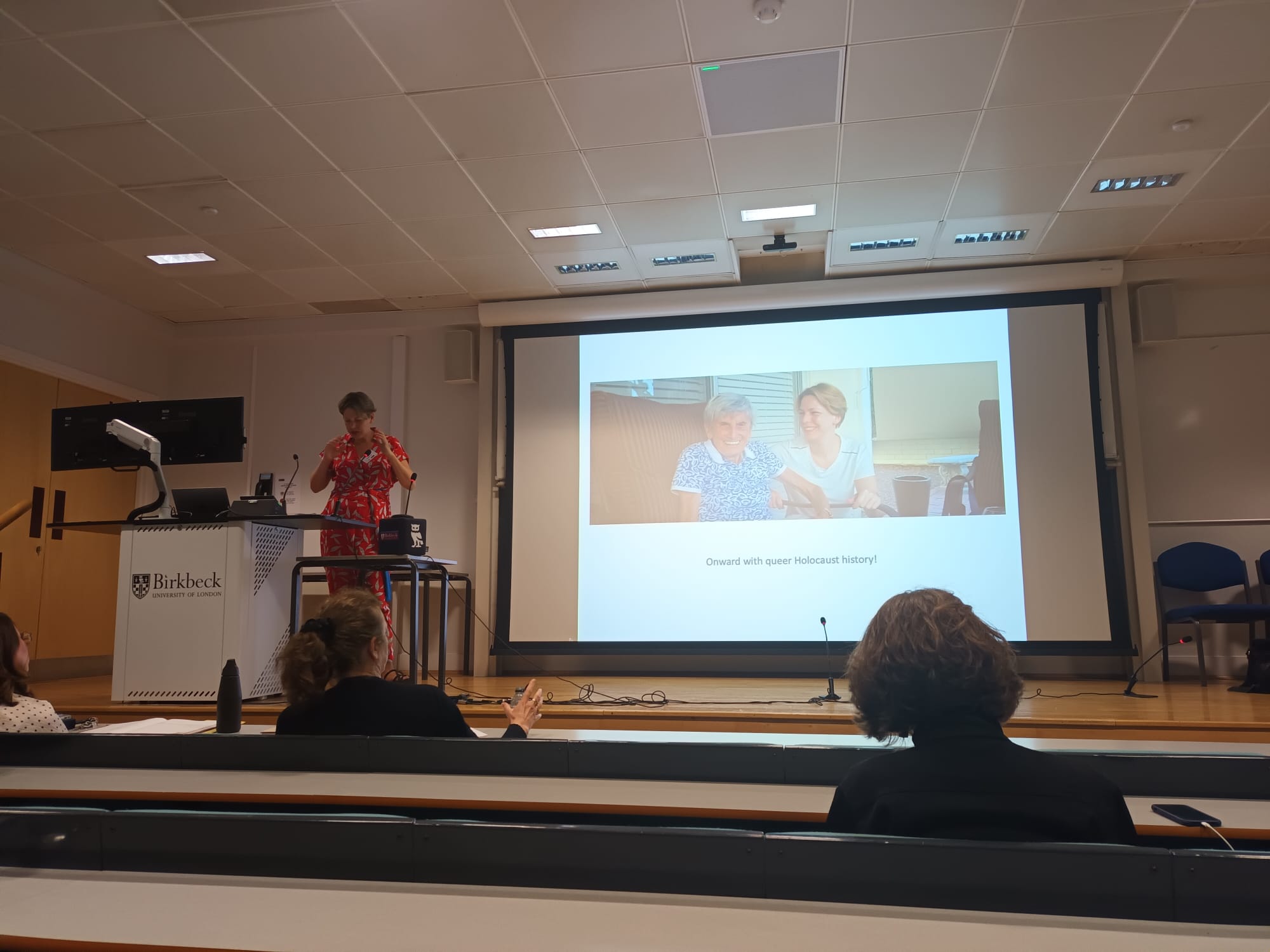
Dr Anna Hájková (University of Warwick), a former LBI Fellow, appeared on a panel with Dr Christine Schmidt (Wiener Library) on the emergence of Holocaust survivor narratives and gendered and spoke about queer notions of witnessing. Focusing on the testimony of the German Jewish survivor Margot Heuman, Hájková identified blind spots in the creation of oral histories of the Holocaust. Together with other speakers on the panels, she problematised the structural as well as epistemic constrictions that marginalise and conceal queer Holocaust histories and the identities of queer survivors.
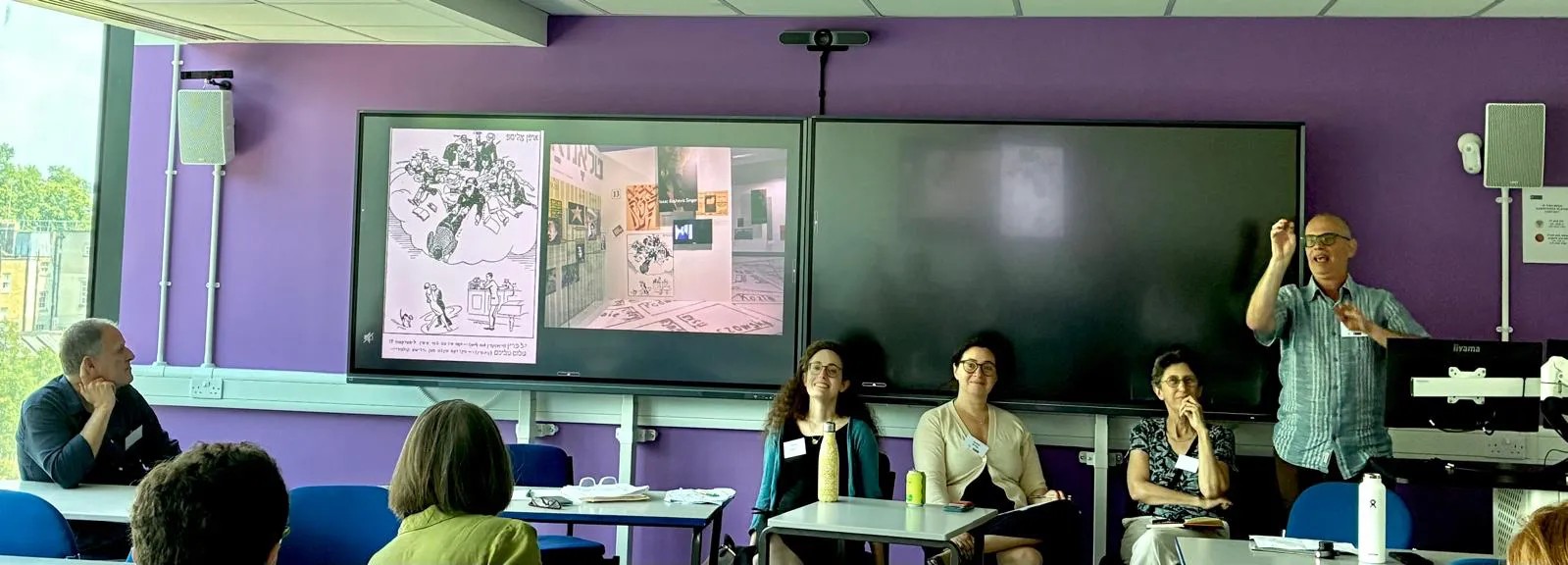
Prof Sonia Gollance (UCL) joined a panel discussion on ‘The Space and Place of Yiddishland: Real, Imagined, and Mediated,’ in which she discussed the pedagogical, historical and contemporary notions of Yiddishland together with Prof Ayelet Brinn (Hartford), Vivi Lachs (QMUL) and Shachar Pinsker (Michigan). Gollance also moderated two sessions on British Jewish cultural history and Yiddish political thought respectively. LBI London Board Member Prof David Feldman (Birkbeck) chaired the session ‘Rethinking the Cousinhood: Anglo-Jewish elites.’
This year’s BIAJS conference had a strong focus on modern and contemporary history, with several additional papers exploring German-Jewish history, such as Dr Christine Achinger’s talk on spatial tropes of ‘too Eastern’ and ‘too Western’ Jews in key texts in German debates on Jewish emancipation. Sanne de Niet (University of Amsterdam) investigated 19th-century discussions on the space and role of the Second Temple. Prof Michal Ben-Horin analysed places and spaces in the works of Austrian-Jewish writer and psychoanalyst Anna Maria Jokl. Dr Ruth Natterman (Leipzig University) presented a biographical study of the German-Jewish activist Gertrud Baer, who was central to the work of the Women’s International League for Peace and Freedom. Several papers, such as those by Meitar Tewel (ETH Zürich), Dr Alexandra Klei (Technical University of Braunschweig), and Dr Henri Hoor (Bauhaus University Weimar) explored Jewish spatialities in Berlin, Hamburg and Frankfurt am Main in the modern, post-war period.
A walking tour on German-Jewish refugees in Bloomsbury, led by the Association of Jewish Refugees, together with generous lunch breaks for conversation and networking, rounded off the conference. This year’s BIAJS conference showcased the breadth of current Jewish studies and how scholars of Jewish Studies bring questions of space, displacement, ritual and memory into conversation. New connections were made, old ones strengthened, and many fascinating insights and trivia were gleaned throughout the three days on Birkbeck’s Bloomsbury campus.